A Chain of Reactions
What We Learned About Anchor Chain and Anchor Types, What Actually Holds in the Med
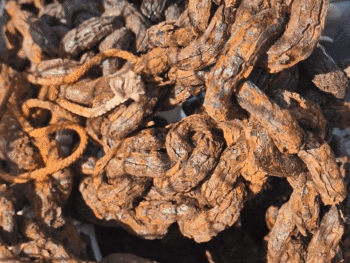
Where do I even begin. The anchor chain, worn and weathered by years in the locker, had quietly turned itself into a pile of rust gravel. It was a genuinely pitiful sight, eighty metres of what used to be 12mm galvanised chain, reduced in places to something you could crumble in your hand.
Getting it off the boat was its own project. The weight and the mess made it feel impossible on our own, until the team at Marina Le Lavandou showed up like knights in slightly less shiny dinghies and helped us lower the whole tangled mess down into a waiting tender. As we pulled it out of the locker link by link, the true extent of the decay came into view: a rusted, clumped knot that we genuinely had to hack our way through in places.
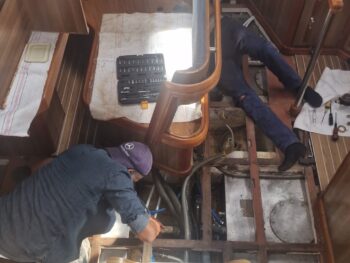
Then came the locker itself. Vacuum cleaner in one hand, rust remover in the other, I went to war with years of flaking rust clinging to every surface like a barnacle that refused to let go. It took a while, but the locker came out the other side clean and ready for a new chain of command.
That whole ordeal is what sent us down a rabbit hole on ground tackle, chain grades, anchor types, and what actually holds on the seabeds we sail over here in the Med. Here's what we learned.

Chain Basics: What Your Anchor Chain Actually Is
Most cruising boats use calibrated short-link chain, sized in millimetres (6mm, 8mm, 10mm, 12mm, 14mm and up), calibrated so the links sit correctly in your windlass gypsy without jumping or jamming. That calibration matters: mismatched chain and gypsy is a common cause of chain slipping or grinding under load.
Chain comes in a few grades:
- G30 (mild steel, galvanised) – older, softer, less common on new boats now
- G40 / G43 (high test, galvanised) – the standard for most cruising boats, a good balance of strength and cost
- G70 – higher tensile strength for the same diameter, letting you carry a lighter overall system, more common on larger or performance-focused boats
- Stainless steel – looks fantastic, resists rust staining on deck, but is more expensive and, contrary to what people assume, not automatically stronger than G40 in the same size
Our original chain was 12mm galvanised, 80 metres long, and had simply reached the end of its life through age and gradual corrosion, not from being wildly undersized. Galvanised chain doesn't last forever. Regularly check for pitting, flattened links, and rust that keeps returning after a clean, that's the chain telling you it's on borrowed time.
How Much Chain Do You Actually Need
Scope, the ratio of chain length to water depth, is what actually makes an anchor hold. A common rule of thumb for all-chain rode is 5:1 in calm conditions and 7:1 or more in wind or swell, measured from the bow roller to the seabed, including tide.
For a boat our size doing regular Mediterranean anchoring, 60-100 metres of chain is a realistic range, which is exactly why our 80 metre chain made sense for us. All-chain rode is heavier than rope-chain combinations but sits lower, holds a better catenary curve, and resists chafe on rocky or coral bottoms far better than rope ever will, genuinely worth the extra weight for most cruising boats.
Types of Anchors and What They're Good At
Plow-style anchors (CQR, older hinged designs) The original cruising standard. Reasonable all-rounders, but generally outperformed now by newer designs in weed and soft mud.
Fixed-shank plow (Delta and similar) Simple, no moving parts, sets reliably in sand and firm mud, weaker performance in thick weed.
New-generation scoop/roll-bar anchors (Rocna, Manson Supreme, Mantus, Spade, Vulcan) This is where most serious cruisers have landed over the last 15-20 years. The concave scoop shape and sharp leading edge set fast and dig deep, even through weed into the sand or mud below, which is exactly the mixed bottom you get constantly in the Med. If we were choosing one anchor type for anywhere we sail here, this category is it.
Claw anchors (Bruce and similar) Set quickly and forgive changes in wind direction well, genuinely good in rock and coral, but noticeably weaker holding power in mud and soft sand compared to the newer designs.
Fluke anchors (Danforth and similar) Excellent holding in clean sand and mud for the weight, very poor in weed and rock, and prone to fouling on their own rode if the wind swings around. Common as a lightweight secondary or kedge anchor rather than a primary.
Fisherman anchors The traditional design, genuinely useful on rock and kelp where a scoop anchor struggles to bite, but poor in mud and sand. Worth carrying as a specialist backup if you know you're heading somewhere rocky.
Grapnel anchors Small, foldable, fine for a dinghy or a very light boat on rock, not a serious option as a primary anchor on a cruising boat.
Mediterranean Seabeds and What Actually Holds
The Med throws a real mix at you, often within the same bay:
Sand – Common and generally the easiest holding ground. Most anchor types perform reasonably well here, new-generation scoop anchors excel.
Mud – Found in many harbours, river mouths, and sheltered bays. Needs an anchor that can dig deep rather than just skim the surface, scoop anchors and fluke anchors both do well here.
Weed, particularly Posidonia oceanica seagrass – This is the one every Med sailor needs to understand, not just for holding but legally. Posidonia meadows are protected in much of the Mediterranean, including France, Spain, and Italy, and anchoring directly on them can mean real fines in some areas. Beyond the legal side, anchors don't hold reliably in thick Posidonia anyway, chain tends to sit on top of the meadow rather than digging into the seabed beneath it. Where it's an option, use a sandy patch, a mooring buoy, or a designated anchorage, and check apps or charts that show seabed type before you drop the hook. A scoop-style anchor is the best chance of cutting through thinner weed into the sand below, but thick Posidonia is genuinely a no-anchor zone in a lot of places now.
Rock – Found around parts of Croatia, the Greek islands, and Corsica in particular. No anchor holds reliably on bare rock, and chain can get seriously fouled between rocks. A mooring buoy or marina is the better call here whenever one is available; a fisherman-style anchor is the closest thing to a rock specialist if you truly have no other option.
Matching Anchor to Seabed
Seabed | Best Preformers | Avoid |
|---|---|---|
Sand | New-generation scoop, Delta, Danforth | - |
Mud | New-generation scoop, Danforth | Claw anchors |
Weed / thin grass | New-generation scoop | Danforth, claw |
Posidonia meadow | Avoid anchoring, use buoy/marina | All types (legal and practical risk) |
Rock | Fisherman (specialist use), mooring buoy preferred | Danforth, grapnel |

Anchor Brands and What They Cost
Pricing on ground tackle swings a lot by size, material (galvanised vs stainless vs aluminium), and retailer, so treat the numbers below as a starting orientation, not a fixed price list. For a boat in our size range, you're generally looking at a 20-25kg class anchor.
- Rocna – widely regarded as one of the benchmark new-generation anchors. Galvanised models start from around €168 for smaller sizes, with stainless steel from around €335, prices rise significantly for the 20-25kg range suited to bigger cruising boats. Rocna's sibling design, the Vulcan (a fixed-shank version of the same concept), starts from around €245 galvanised.
- Manson Supreme – another well-regarded scoop-style anchor, comparably priced to Rocna in equivalent sizes. Real-world reports for a 20kg galvanised Manson Supreme landed at roughly €500-550 including delivery, smaller sizes start well under that.
- Mantus (M1/M2) – known for aggressive, deep-setting geometry. Mantus's full range spans roughly €178 to over €3,000 across their smallest to largest sizes and stainless options, with a mid-size galvanised M2 commonly falling in the low-to-mid hundreds of euros.
- Spade – a premium option, priced by effective surface area rather than just weight, and noticeably more expensive than the others in equivalent sizes. A galvanised S120 (25kg, suited to boats up to roughly 59ft) runs into four figures, we found one retailer listing it at €1,347.
- Delta (Lewmar) – a simpler, no-moving-parts fixed plow, generally the most budget-friendly of the well-known brands in a given size, a solid option if you're anchoring mostly in sand and firm mud rather than heavy weed.
Chain Pricing: What to Budget
Galvanised calibrated chain is typically sold by the metre or in bulk drums (50m/100m), and buying in a drum is noticeably cheaper per metre than buying loose length.
- 10mm G40 galvanised – roughly €10-13 per metre at retail, closer to €12-13/metre bought in a 50m drum
- 12mm G40 galvanised – roughly €14-21 per metre depending on retailer and whether you buy loose or in bulk
For a realistic 80-100 metre chain like ours, that puts a full re-chain project comfortably into four figures before you even add labour, which is exactly why it's worth inspecting your chain regularly rather than waiting for it to turn into rust gravel on its own schedule.
What We'd Do Differently
Knowing what we know now, we'd inspect the chain properly before buying the boat rather than after, and we'd have picked a new-generation scoop anchor from day one instead of assuming our original ground tackle was fine because it came with the boat. If you're buying secondhand, treat the chain and anchor exactly like you'd treat the engine or the rigging: worth its own proper inspection, not an afterthought.
FAQ
What's the best all-round anchor for the Mediterranean? A new-generation scoop/roll-bar anchor (Rocna, Manson Supreme, Mantus, Spade, or similar) handles the mixed sand, mud, and thin weed most Med anchorages throw at you better than older plow or claw designs.
Can I anchor on Posidonia seagrass in the Mediterranean? In many areas it's restricted or fined, and anchors don't hold well in it regardless. Look for sandy patches, use a mooring buoy where available, or check a seabed chart before dropping the hook.
How much chain do I actually need? A common rule of thumb is 5:1 scope in calm conditions and 7:1 or more in wind, measured from bow roller to seabed including tide. For regular Med cruising, 60-100 metres of chain is a realistic range for many boats.
Is stainless steel chain worth the extra cost over galvanised? It looks better and won't leave rust streaks on deck, but it isn't automatically stronger than galvanised G40 in the same size. It's a cosmetic and corrosion-resistance upgrade more than a strength one.
Sources for pricing referenced above: SVB24 (Rocna, Vulcan), Mantus Marine and MAR Nautic (Mantus M2), Nova Argonautica / forboat.eu (Spade S120), Gael Force Marine and a YBW Forum owner report (Manson Supreme), and Jimmy Green Marine / Seaborne Marine / SVB24 (chain per metre). Prices fluctuate by retailer and season, confirm current pricing before publishing final figures.
Learn More About Boatsystems