Sailing to Tunisia
History, Sightseeing, Markets, and the Marinas Worth Knowing
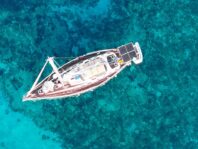
We arrived in Marina Cap Monastir at six in the morning, calling the marina on VHF with no reply, eyeing a small bay before the entrance and wondering if we should just anchor and wait. Being us, we sailed in anyway, and a dinghy came straight out to guide us to our berth. Bolongo has no bow thruster, so the tight parking spot had us fully on edge, until the guys on the dinghy pushed our bow into the right angle and we slid in clean. Neighbours came out before the lines were even secured, and within a day we'd been introduced to a whole community we didn't know existed.
That's Tunisia in a nutshell for a lot of sailors: a slightly nerve-wracking arrival followed by more warmth than you expected. Here's what we've learned about the history, the sightseeing, the food, the community, and the marinas worth knowing if you're heading this way yourself.
A Quick History of Tunisia for Sailors
Tunisia has been a genuine crossroads of the Mediterranean for close to three thousand years, and it shows the moment you step off the boat. Carthage, founded by Phoenician settlers, rose to become one of the great powers of the ancient Mediterranean before its long rivalry with Rome ended in its destruction, and later reconstruction, as a Roman city. Roman rule left an extraordinary footprint across the country, most dramatically at El Djem, home to one of the best-preserved Roman amphitheatres anywhere in the world, rivalling the Colosseum in scale.
Later centuries brought Arab-Islamic rule, with Kairouan, founded in the 7th century, becoming one of the holiest cities in Islam and a major centre of learning. Ottoman influence followed, then French colonial rule from 1881 until independence in 1956. All of that layered history is part of what makes sailing into Tunisia so different from a French or Italian stop on the same trip, ancient ruins, medina architecture, and a genuinely distinct culture, all within a short sail of Sicily and Malta.
Sightseeing Worth Your Time
Sidi Bou Said, the blue-and-white hillside village near Tunis, is one of the most photographed spots in the country and an easy stop if you're anywhere near Gammarth or Tunis.
Carthage, also near Tunis, lets you walk through the ruins of the ancient city itself, along with the Antonine Baths and archaeological museum.
The Bardo Museum in Tunis holds one of the world's most significant collections of Roman mosaics, genuinely worth the detour inland if you're based near the capital.
El Djem's Roman amphitheatre, roughly an hour inland from the Monastir and Sousse coast, is one of the most impressive Roman structures anywhere in the Mediterranean and an easy day trip if you're based in Monastir.
Kairouan, also a manageable day trip from the Monastir/Sousse area, centres on the Great Mosque of Kairouan, one of the oldest and most significant mosques in the Islamic world.
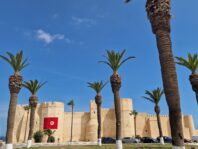
The Ribat of Monastir, an 8th-century fortified monastery right in Monastir itself, sits practically on top of the marina and has appeared in several international film productions, worth the short walk from your own berth.
Sousse, a short trip up the coast from Monastir, has a UNESCO-listed medina and a lively old town if you want a change of pace from marina life for a day.
Markets and Food
Tunisian food leans on bold, warm flavours: harissa (a spiced chili paste that shows up everywhere), couscous as the true national dish, often built around lamb, chicken, or fish, brik (a thin pastry parcel usually filled with egg, tuna, and capers, fried crisp), and mechouia, a smoky grilled pepper and tomato salad that's become one of our own go-to lunches on board. Being a coastal country, fresh seafood is genuinely excellent and affordable almost everywhere along this stretch.
The markets match the food. Near our own base in Monastir, a short walk from the marina brings you to a fresh food market with an enormous variety of seasonal fruit and vegetables, very fresh meat, poultry, and fish, and stall after stall of spices, nuts, and dried goods, all at prices that felt almost unreal after provisioning in France. Medina souks across the country are also worth exploring for ceramics, ready to complement ingredients you've picked up, ceramics, leather goods, and ready-made spice blends if you want to bring a bit of Tunisian cooking back onto the boat.
The Sailors' Community
This is genuinely one of the best-kept secrets of sailing to Tunisia. Monastir in particular has a real, active liveaboard community: an ongoing WhatsApp group, a Facebook group, and a steady rotation of boat families and full-timers passing through or wintering over. There are weekly socials, Friday night drinks at a marina bar, and a Sunday bring-your-own barbecue at the yacht club that's become a proper gathering point for anyone new in the marina.
We arrived from months of relative isolation in France and found the contrast almost overwhelming at first, in a good way. Our kids made fast friends with other boat kids, we made genuine friends with families like Kindred Courage and Xclip, and as a mother, connecting with other boat moms taught us more about coping with the day-to-day challenges of this life than almost anything else has. If you're arriving as a solo parent or without a full crew for a stretch, this community makes an enormous difference, we found being a woman sailing alone with two kids remarkably easy here, in large part because of how looked-after the marina and wider sailor community made us feel.
Marinas and What's Nearby
Marina Cap Monastir is where we ended up basing for several months, and it's an excellent value spot to get real boat work done: we had a full list going, from cleaning out the fuel tank to finally tracking down our own water-in-the-bilge problem, re-caulking the deck, and building a new solar arch and bimini enclosure. Managing tradespeople here takes patience, language barriers and a different pace than European efficiency, but the results and the pricing generally make it worthwhile. Nearby: the Ribat of Monastir, the town's own medina, the fresh market, and day trips to El Djem, Kairouan, and Sousse.
Gammarth, close to Tunis, was actually our own last stop before the day sail down to Monastir. It's an easy, convenient base close to the capital, with Sidi Bou Said, Carthage, and the Bardo Museum all within reach for a day out.
Hammamet, on the Cap Bon peninsula, is home to Yasmine Hammamet Marina, a large, well-equipped marina attached to a busy resort town, more restaurants and nightlife than working boatyard. Nearby Nabeul is known for its pottery and ceramics if you want to browse beyond the marina.
Bizerte, Tunisia's northernmost harbour, sits closest to Sicily and Sardinia, making it a genuinely practical jumping-off point if you're routing this leg from or toward Europe rather than further south. It has a picturesque old port and medina with a noticeably different, less touristy feel than the more southern marinas.
What We'd Tell First-Timers
Don't let the language barrier or the slower pace with tradespeople put you off getting real work done here, it's some of the best value boatyard support we've found anywhere in the Mediterranean. Lean into the sailors' community early, it's genuinely one of the warmest we've encountered, and it will make a longer stay. And build in time for the history and the food, not just the boat list, El Djem and Kairouan alone are worth the detour from the coast.
What We'd Do Differently
We'd push harder on verifying explanations instead of accepting the plausible one, and we'd treat "the surveyor didn't mention it" as a reason to ask more questions, not fewer. The boat was still the right boat for us. The inspection just could have saved us months of surprise work if we'd trusted our own instincts a little more and other people's reassurances a little less.
FAQ
Is Tunisia a good place to base a boat for refit work? Yes, particularly Monastir, which combines relatively affordable labour and materials with a strong expat and liveaboard community, though managing tradespeople takes patience with language and pace differences.
What Tunisian food should I try while sailing here? Couscous, brik, harissa, and mechouia are all worth seeking out, and fresh seafood along the coast is excellent and affordable. Local markets near marinas like Monastir offer very fresh, well-priced produce, meat, and fish.
Is it easy to sail to Tunisia as a solo parent or short-handed crew? We found it genuinely manageable, largely thanks to the strength of the local sailing community, particularly in Monastir, where social support and a welcoming local culture made day-to-day life noticeably easier.
What historical sites are worth visiting near the main Tunisian marinas? Near Monastir and Sousse, El Djem's Roman amphitheatre and Kairouan's Great Mosque are both manageable day trips. Near Gammarth and Tunis, Carthage, Sidi Bou Said, and the Bardo Museum are all close by.