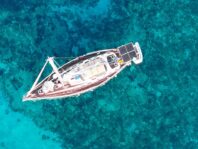
Sailing Malta, Comino & Gozo
Worth More Than a Passing Stop
We sailed into Malta after a long, mostly windless motor up from Tunisia, and it's stuck with us since as one of the more layered stops on our route. Small on the chart, genuinely time-consuming to do properly once you're actually there. Here's what we've learned since, from checking notices to mariners before you move, to timing Comino right, to why Malta rewards a longer stay than most sailors give it.
Notice to Mariners: What They Are and Why You Should Check Them
Before moving between anchorages or into any of Malta's harbours, it's worth checking the current Notices to Mariners issued by Transport Malta's Ports & Yachting Directorate. These cover exactly the kind of thing that can catch you out with local knowledge alone: mooring buoys being installed or removed, dredging and construction work (breakwater projects, for example), temporary navigation hazards, and notices around yachting events and regattas that might affect your route or timing.
Transport Malta also runs Vessel Traffic Services (VTS) covering local waters, particularly relevant around the Grand Harbour and its approaches, along with published guidance on safety of navigation and yachting in Malta specifically. All of this is published and archived on transport.gov.mt, and it's a five-minute check worth doing before any significant move around the islands, especially into Valletta's harbours or if you're planning to anchor somewhere you haven't been before.
Reading Malta's Coastline: South, West, and North
Malta's coastline behaves differently depending on which side you're on, and knowing this before you commit to a route saves a lot of rolling around at anchor.
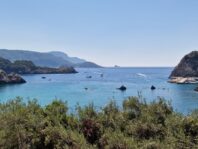
The south sits in the lee of the island during Malta's prevailing northerly summer winds, which means flatter water, less swell, and generally the most comfortable anchoring when conditions up north are lively. Bays like St. Peter's Pool, a striking natural limestone pool best appreciated from the water, and the quieter Ħofriet, along with the historic harbour of Marsaxlokk, make the south a genuine highlight rather than a fallback option.
The west coast is more of a transition zone, calmer and more accessible than the open south, with wide, sheltered bays like St. Paul's Bay (tied to the tradition of St. Paul's shipwreck here) and the quieter, understated Selmun a little further along. It's an easy, relaxed stretch to sail if you're based near Valletta or Sliema.
The north is a different character entirely: wide, open bays spread over longer distances, more exposed to weather, and generally better suited to faster boats covering ground between spots like Armier Bay, Paradise Bay (the narrow channel between Malta and Comino), and Golden Bay, rather than short, leisurely hops.
Comino and the Blue Lagoon: Getting the Timing Right
The Blue Lagoon is genuinely one of the most photographed stretches of water in the Mediterranean, and also one of the most congested by mid-morning. In peak season this stretch of water has historically drawn somewhere in the region of 8,000 to 10,000 visitors on the busiest days, which is exactly why Malta introduced a daily visitor cap of around 4,000 for the lagoon. Large tour and ferry boats, often carrying anywhere from 50 to 200 passengers, typically arrive in a wave between around 11am and 12:30pm, which is when the lagoon shifts from calm to genuinely packed.
If you're arriving by your own boat, timing is everything:
- Early morning is the payoff. Glassy water, soft light, no ferry noise, and the lagoon largely to yourself before the day boats arrive.
- Late morning through early afternoon is peak traffic, lively and social, but tightly packed with anchored and moored boats and managed swim zones.
- Late afternoon is the reset, as the day-tripper boats thin out and head back, the water settles and the crowds ease off again.
If the Blue Lagoon itself feels too packed, Crystal Lagoon, just around the corner, is a genuinely good alternative: deeper water, dramatic cliffs, sea caves worth a slow approach or a snorkel, and noticeably fewer large boats.
What a Survey Does (and Doesn't) Cover
A proper marine survey is worth paying for, but it's not exhaustive by default. Surveyors typically do a visual and moisture-meter check of the hull, check the rig visually, and note obvious issues, but they don't strip the boat down, and they won't necessarily catch something like a slow tank leak that only shows up after the tanks have been full for a while. Our own surveyor's report never mentioned the water we'd already flagged in the bilge.
Ask directly what is and isn't included before the survey happens, and don't assume "surveyed" means "fully verified." It means "professionally inspected within the scope they were hired for."
Water Traffic: What to Actually Expect
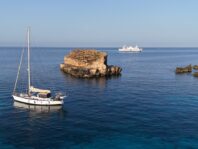
Malta's waters are busy, and it's worth planning around that rather than being surprised by it. Regular ferry services run between Sliema, Buġibba, and Gozo, and separately between the Grand Harbour and Mġarr in Gozo, alongside a harbour ferry connecting the Grand Harbour and Marsamxett. Add in dive boats, jet skis, RIB charters, and a heavy concentration of tour boats around Comino in season, and the water around the most popular spots gets genuinely congested by late morning.
Vessel Traffic Services cover the busier commercial approaches, particularly around the Grand Harbour, and it's worth keeping a proper lookout and a bit of extra patience around Comino and the channel between Malta and Gozo during peak hours, this is not open, empty cruising ground in high season.
Why Malta Is Worth More Than a Passing Stop
Malta packs an unusual amount of layered history into a small footprint. The Ġgantija temples on Gozo and the Ħal Saflieni Hypogeum rank among the oldest freestanding structures on earth, older than the pyramids. Phoenician and Roman rule left their mark, followed by the arrival of the Knights of St. John in 1530, who famously withstood the Great Siege of 1565 against the Ottoman fleet, an event that directly led to the building of Valletta itself. French and then British rule followed, and Malta earned the George Cross for its endurance under siege in the Second World War, before gaining independence in 1964 and later joining the EU in 2004.
That old-world layering sits right alongside a genuinely modern, fast-moving side of the island. Malta has built itself into a real hub for iGaming, fintech, and tech-adjacent industries, English is an official language alongside Maltese, and for anyone with a relevant technical skill set, remote-friendly role, or professional qualification, finding work here is realistically more accessible than in a lot of the Mediterranean, something worth knowing if you're considering basing here for a season or longer rather than just passing through.
Between the history stacked in Valletta and the Three Cities, the practical, English-speaking modern economy, and a coastline that genuinely rewards slowing down, particularly around Gozo, Malta earns a longer stop on almost any Mediterranean route.
FAQ
What is a Notice to Mariners and do I need to check it before sailing in Malta? It's an official notice from Transport Malta's Ports & Yachting Directorate covering navigation hazards, mooring changes, dredging work, and events that could affect your route. Worth checking on transport.gov.mt before any significant passage or new anchorage, especially near Valletta's harbours.
What's the best time to visit the Blue Lagoon by boat? Early morning, before the large tour and ferry boats arrive around 11am to 12:30pm. Late afternoon, once the day-tripper crowd starts heading back, is the next best window.
Is the water around Malta busy with traffic? Yes, particularly around Comino and the Malta-Gozo channel in peak season, with regular ferries, tour boats, and private charters all sharing the same popular anchorages by late morning.
Is Malta a good place to base a boat for a longer stay? Genuinely yes, both for the sailing (varied coastlines, sheltered options in most wind directions, Gozo for slower cruising) and practically, English is widely spoken, the economy is accessible for skilled and remote workers, and there's a strong maritime and expat community.