Sailing Central Mediterranean
Sicily, Malta & Tunisia Route Guide
The central Mediterranean, the stretch that links southern France and Sardinia down through Sicily and the Sicily Channel to Malta and Tunisia, is one of the most rewarding cruising grounds out there and also one of the most logistically involved. We've sailed a good chunk of it ourselves, from our first ever offshore passage out of France to a passage out of Tunisia that came with a very real scare involving a good friend. Here's the route, real experience included, plus the anchorages and stops worth knowing about.
Route Overview
This region roughly forms a triangle: Sardinia and Sicily to the north and northeast, Tunisia along the North African coast to the south, and Malta sitting almost exactly in the middle of the Sicily Channel between Sicily and Tunisia. Most boats moving between the western Mediterranean (France, Spain, the Balearics) and this region come down through Corsica and Sardinia, then either continue to Sicily and Malta, or drop further south to Tunisia, with Malta and the Sicily Channel forming the natural crossing point between the two.
Our Own Passage: France to Sardinia
We took this leg on a 5-day weather window out of Antibes, deciding to go rather than risk being stuck in France for who knows how long. The first day was glorious, decent wind off the French coast heading toward Corsica, sun out, everyone happy.
Then the sun went down and the sea state picked up. Seasickness hit both me and our youngest, Luuk, hard and fast, on a night when our autopilot also chose to fail, leaving Reiss to hand-steer for nearly two hours while I was down and out. We made Corsica around six in the morning, exhausted, and anchored out for a short rest before pushing on.
The next stretch, down Corsica's east coast toward Sardinia, was some of the best sailing we've done. A steady 8 to 9 knots of wind had us holding 8.5 knots of boat speed, genuinely one of those days that reminds you why you're doing this. We made the call to stop early that day for a proper meal and a full night's sleep rather than push straight through, which turned out to be the right call. Rest is one of the most underrated safety tools you have on a passage like this.
Anchorages worth knowing on this leg, beyond where we personally stopped: Corsica's east coast around Porto Vecchio offers good shelter and easy provisioning, and Bonifacio at Corsica's southern tip is spectacular, a narrow limestone gorge harbour, though it gets busy and pilotage in is worth researching beforehand. On the Sardinian side, Cagliari and the anchorages around Villasimius on the southeast coast are popular, well-protected stops before continuing south or west.

Sicily and the Sicily Channel
Sicily sits at the crossroads of this whole region, and even if your route doesn't put you ashore there, you'll likely sail past or through the wider Sicily Channel on the way between Sardinia, Malta, and Tunisia. It's worth knowing what's there:
- Marina di Ragusa, on Sicily's south coast, is one of the most popular stops for cruisers transiting between Malta, Tunisia, and mainland Italy, well set up for provisioning and haul-outs
- Trapani and the Egadi Islands (Favignana in particular) on the west coast, closer to the Tunisia crossing routes
- The Aeolian Islands, north of Sicily, if your route allows a detour, dramatic volcanic scenery and good anchorages, though further off the direct Malta-Tunisia line
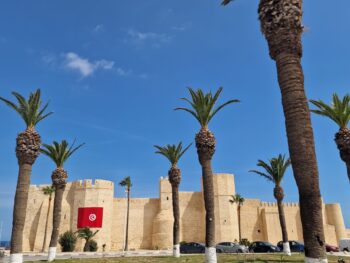
Tunisia: Monastir as a Base
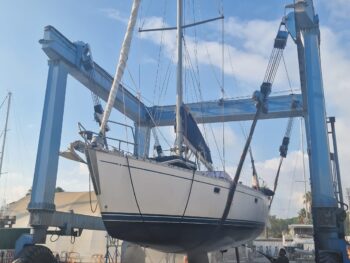
We ended up basing out of Marina Cap Monastir for several months, and it's genuinely one of the best-value spots in the region to get boat work done. We had a full list going: cleaning out the fuel tank, finally getting the water-in-the-bilge problem properly diagnosed, re-caulking the deck, building a solar arch with davits, a new bimini enclosure, and fresh upholstery. Managing tradespeople there took patience, language barriers and a different pace than we were used to as efficient Europeans, but the marina community made up for it entirely. Weekly socials, a WhatsApp and Facebook group full of other boat families, and a genuinely warm local community made it one of the easiest places to be a woman sailing solo with two kids for a stretch. There's also a fresh food market a short walk from the marina with excellent, very affordable produce, meat, fish, and spices.
One real hazard worth flagging: the Kuriat Islands, two small Tunisian islands just off the coast near Monastir, have shallow sandbanks that have caught out sailors we know personally. Treat the area with real caution and don't cut corners close to those banks.
Other Tunisian Harbours Worth Knowing
Monastir isn't the only option along this coast, and depending on your route north or south, one of these might suit your plans better.
Gammarth, up near Tunis, was actually our own last port before the day sail down to Monastir, after flying back in from a few weeks away in Rotterdam. We only stayed a few days, but it's a convenient, easy base close to the capital, with the old village of Sidi Bou Said and its blue-and-white streets an easy trip from the marina if you want a proper day off the boat.
Hammamet, further south on the Cap Bon peninsula, is home to Yasmine Hammamet Marina, a large, well-equipped marina attached to a busy resort town. It's a good option if you want more restaurants, nightlife, and tourist infrastructure within easy walking distance, more resort atmosphere than working boatyard.
Bizerte, right at Tunisia's northern tip, is the country's northernmost harbour and sits closest to Sicily and Sardinia, which makes it a genuinely useful jumping-off point (or landing point) for crossings north. It has a picturesque old port with a narrow channel lined with cafés, alongside a more modern marina, and it's worth considering if you're routing this trip in the other direction, arriving in Tunisia from Sicily rather than from France.
Between Gammarth in the north and Monastir further south, plus Hammamet and Bizerte as options either side, there's genuinely enough coastline here to break the Tunisian leg of this route into as many or as few stops as your schedule allows.
Our Own Passage: Monastir to Malta
Leaving Tunisia is its own process. You'll clear out through police, customs, and the garde nationale, and it's genuinely bureaucratic. We nearly got held up ourselves because we'd changed our boat's registration to Dutch nationality between arrival and departure and hadn't shown the updated paperwork to the right people, they had no record we actually owned our own boat. A friendly relationship with the local police chief sorted it out, but the lesson stands: keep your current ownership paperwork accessible and up to date with local authorities, every time something changes.
Boats get searched on both arrival and departure, thoroughness varies by team, and it's generally about preventing people from being smuggled out of the country rather than anything to do with your gear.
Once cleared, the passage to Malta is roughly 175 nautical miles. We routed north of Lampedusa and Linosa, first threading past the Kuriat islands mentioned above.
The real scare on this route wasn't ours, it happened to a good friend, Bill, a 78-year-old, highly experienced American sailor we'd gotten close to in Monastir. He left the morning after we did, alone, in weather we genuinely didn't expect him to sail in. A couple of hours later he messaged: he'd run aground on the shallow area south of Isla Conigliera, near Lampedusa, and couldn't get his mainsail down, a genuinely dangerous combination, since a boat stuck on a sandbank with the main still up can heel and potentially capsize in the wrong conditions. We alerted the coast guard immediately, a navy vessel was dispatched, and a passing fishing boat helped get his main down in the meantime. He wasn't hurt, and the boat was later towed clear, but it's a real reminder of how fast a situation can escalate, and why having someone onshore who knows your route and can raise the alarm matters, even on a "simple" passage.
On our own boat, getting back to open water after months in a marina hit me harder than expected, a disorienting kind of seasickness, more brain fog than nausea, to the point I couldn't spell our own boat name over the radio in phonetic alphabet during a coast guard identification call. It passed after a few hours. The wind then died completely, and we motored the rest of the way in flat, glassy conditions, past a small offshore rig the kids loved watching at sunset, through a quiet night with little traffic beyond a few tankers, and into one of the most striking sunrises we've seen, mist lifting slowly until the horizon just dissolved into the sea. Wind picked back up around 3pm the next day as Malta came into view, letting us sail the final stretch in properly.
Places Worth Visiting in Malta
Malta rewards a slower visit. Valletta's Grand Harbour is spectacular to sail into, and Marsamxett Harbour on the other side of the peninsula is a common, well-protected anchoring and berthing option close to the capital. Gozo and the Blue Lagoon at Comino are worth the detour if your schedule allows, though Comino gets crowded with day-tripper boats in peak season, better visited early morning or outside the busiest summer weeks.

Practical Tips for This Route
Build in real weather-window flexibility. Our France-to-Sardinia leg only happened because we committed to a 5-day window rather than waiting for a "perfect" one that might not have come. At the same time, don't let a tight window push you into a decision you're not comfortable with, our friend's situation is the clearer example of why.
Keep boat paperwork current and accessible, especially registration and ownership documents, before you check out of Tunisia or any North African port. Bureaucracy moves slower when your papers don't match what's on record.
Respect the Kuriat sandbanks and shallow areas near Lampedusa. Chart them properly in advance and don't assume a route "everyone takes" means it's forgiving of a wrong turn.
Plan for seasickness, including your own, even if you don't normally get it. Both of our worst bouts on this route happened to people who don't usually struggle with it. If you're sailing with kids, our Family on Board guide covers what's actually helped us manage it underway.
Have a shore contact who knows your route and timing, exactly the kind of arrangement that let us raise the alarm for Bill within minutes of his message.
New to Boating? Here Are Some Tips
FAQ
How long does the France to Tunisia route typically take? Our own crossing from Antibes toward Tunisia, via Corsica and Sardinia, took several days with planned rest stops. Total time depends heavily on weather windows and how much you break the passage into shorter legs versus pushing straight through.
Is the Monastir to Malta passage difficult? At around 175 nautical miles, it's a manageable offshore passage for a prepared boat and crew, but it includes real hazards worth respecting: shallow sandbanks near the Kuriat islands and the Lampedusa area, and long stretches with no wind that can mean significant motoring.
What should I know about clearing out of Tunisia? Expect a formal process through police, customs, and the garde nationale, including a boat search. Make sure your registration and ownership paperwork is current and matches what authorities have on file before you try to leave.
Is Monastir a good base for boat work in the central Mediterranean? We found it excellent value with a strong, welcoming sailing community, though managing tradespeople takes patience with language and pace differences. It's a common wintering and refit stop for cruisers in this region.